Twitter can be a cool tool for writers. I actually got this idea from Twitter (inkyelbows tweeted it).
Basically, you tweet for your characters. It can actually be helpful, in that it makes you a) get into your character's head and b) concisely illustrate who they are.
Friday, October 30, 2009

Thursday, October 29, 2009
A picture is worth...
...four pieces of chocolate and a kitten's spleen.
Seriously though, I find pictures to be so inspirational. Which is weird, because I usually have a hard time writing off of picture prompts (say for contests or whatever). Instead, I tend to just see pictures that inspire me and sort of try to emulate them in my writing. And very often, it's the caption to the picture that inspires me as much as the picture.
For instance, one of my rare bouts of poetry (and even an attempt at a series of poems) was inspired by this photo and this photo in tandem. (Along with many of this user's other photos. Beautiful things they are.)
I was reading blog archives of mine from years ago and I did a lot of writing back then. Like, practically essays on things that were bothering me at the time or whatever. I want to do that some more. I was inspired by some videos lately that were pretty much random, but were just somehow so inspiring. It was like flash fiction in video form. That and vloggers. Something about vloggers inspired me. Maybe bloggers would too. I don't read many blogs outside of YWS. *ashamed*
Anyway, I want to try and go back to that idea of writing essays quite frequently, along with more flash fiction and whatnot. I think it would be good for me to write more (outside of blogging) and experiment a lot, rather than worrying about a long project. Maybe even allow myself to be a little random.
Call it "personal growth".
There are still days I want to take up photography and portrait shooting though. Too bad I don't know any friends who would model for me... All of my friends feign fear of the camera unless they are in the stupidest pose possible.
Seriously though, I find pictures to be so inspirational. Which is weird, because I usually have a hard time writing off of picture prompts (say for contests or whatever). Instead, I tend to just see pictures that inspire me and sort of try to emulate them in my writing. And very often, it's the caption to the picture that inspires me as much as the picture.
For instance, one of my rare bouts of poetry (and even an attempt at a series of poems) was inspired by this photo and this photo in tandem. (Along with many of this user's other photos. Beautiful things they are.)
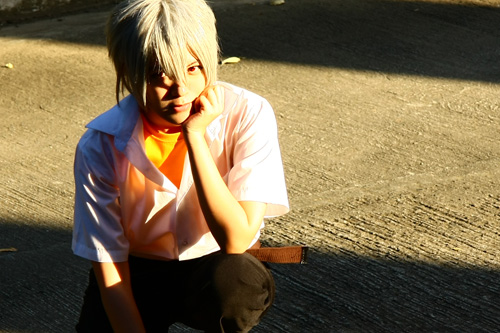
I was reading blog archives of mine from years ago and I did a lot of writing back then. Like, practically essays on things that were bothering me at the time or whatever. I want to do that some more. I was inspired by some videos lately that were pretty much random, but were just somehow so inspiring. It was like flash fiction in video form. That and vloggers. Something about vloggers inspired me. Maybe bloggers would too. I don't read many blogs outside of YWS. *ashamed*
Anyway, I want to try and go back to that idea of writing essays quite frequently, along with more flash fiction and whatnot. I think it would be good for me to write more (outside of blogging) and experiment a lot, rather than worrying about a long project. Maybe even allow myself to be a little random.
Call it "personal growth".
There are still days I want to take up photography and portrait shooting though. Too bad I don't know any friends who would model for me... All of my friends feign fear of the camera unless they are in the stupidest pose possible.
Thursday, October 22, 2009
Revelations about musicals and houses...
*spoilers for early seasons of House M.D. and A Very Potter Musical are contained within*
It's been a while since I've been here, no?
I was thinking about plots and the revelation of plots recently, and was prompted to write based on my recent discovery of House M.D. and the wonderful website known as TV Tropes (specifically this entry).
House has the most wonderful way of setting up its episodes: giving us just enough information to get us hooked, then doing something to make us question, then slowly giving us information in less-than-obvious ways that nonetheless add up to one screaming avalanche of revelation by the end. It's so beautiful. (My favorite episode from Season 1, "Histories", is a prime example of this.)
I loves me the foreshadowing and vague references, but I really hate it when writers just shove it in your face. Audiences are savvy enough to know when something is going to be important later if you make it too obvious. It gives away the ending. (A lampshaded example: If you've ever seen A Very Potter Musical, when Snape gives the pop quiz, he mentions anything that will every be important as a MacGuffin, then asks "Does anyone know what Foreshadowing is?" They lampshade many other things that will become important later also. 'Tis humorously done, but the audience is completely prepared for what comes.)
This is not to say don't foreshadow ever, and don't tell anyone anything so that they are always completely in the dark, but don't make your intentions so blatantly obvious.
House does it where they give you enough information to speculate on, but in a way that you don't realize it's important until it is. For example: in "Mistakes", when you see the patient come to see Chase when he is distracted, he is on the phone. He hangs up and that is it. Later, he mentions that his father died without telling him. Well, wait a minute. A viewer who has watched the seasons all the way through knows that his father is going to die, but we haven't seen anyone tell Chase. Instantly, our antennae are up. Chase was distracted by this phone call... He knows that his father is dead, but we haven't seen him receive this revelation... Therefore... And we are all beautifully rewarded for our speculation when the scene plays out in its entirety when Chase gets the call that his father has passed away.
It's wonderful. It really is. It gets the viewer thinking, they come to a realization and then the realization is played out. Sometimes there is a twist, but when the end is finally revealed, the viewer can look back and see all the hints that were given. And none of it was in-your-face "Look! Look! A clue!"
The TV Tropes entry takes this and expands it to the idea of "plans" in fiction. You notice that when the heroes/villains make plans, the ones that they completely outline usually fail or are interrupted in some way. It is only those that are unspoken to the audience that manage to succeed. This is because the writer wants you to know what the plan is so that when the plan goes wrong, you know it. It's no fun if you don't know what the plan is and then it goes wrong, because you don't know that it's gone wrong. (Similar to goof-ups in theatre - I recall being told to just keep going even if you flub a line or say it in the wrong place. After all, the audience doesn't know that you've messed up.)
Yeah.
So give the reader/viewer a little to chew on, maybe throw in some easy-to-notice-but-not-blatantly-obvious things to reference later and then cash in on it all later. Don't give away the twist in the beginning, please.
It's been a while since I've been here, no?
I was thinking about plots and the revelation of plots recently, and was prompted to write based on my recent discovery of House M.D. and the wonderful website known as TV Tropes (specifically this entry).
House has the most wonderful way of setting up its episodes: giving us just enough information to get us hooked, then doing something to make us question, then slowly giving us information in less-than-obvious ways that nonetheless add up to one screaming avalanche of revelation by the end. It's so beautiful. (My favorite episode from Season 1, "Histories", is a prime example of this.)
I loves me the foreshadowing and vague references, but I really hate it when writers just shove it in your face. Audiences are savvy enough to know when something is going to be important later if you make it too obvious. It gives away the ending. (A lampshaded example: If you've ever seen A Very Potter Musical, when Snape gives the pop quiz, he mentions anything that will every be important as a MacGuffin, then asks "Does anyone know what Foreshadowing is?" They lampshade many other things that will become important later also. 'Tis humorously done, but the audience is completely prepared for what comes.)
This is not to say don't foreshadow ever, and don't tell anyone anything so that they are always completely in the dark, but don't make your intentions so blatantly obvious.
House does it where they give you enough information to speculate on, but in a way that you don't realize it's important until it is. For example: in "Mistakes", when you see the patient come to see Chase when he is distracted, he is on the phone. He hangs up and that is it. Later, he mentions that his father died without telling him. Well, wait a minute. A viewer who has watched the seasons all the way through knows that his father is going to die, but we haven't seen anyone tell Chase. Instantly, our antennae are up. Chase was distracted by this phone call... He knows that his father is dead, but we haven't seen him receive this revelation... Therefore... And we are all beautifully rewarded for our speculation when the scene plays out in its entirety when Chase gets the call that his father has passed away.
It's wonderful. It really is. It gets the viewer thinking, they come to a realization and then the realization is played out. Sometimes there is a twist, but when the end is finally revealed, the viewer can look back and see all the hints that were given. And none of it was in-your-face "Look! Look! A clue!"
The TV Tropes entry takes this and expands it to the idea of "plans" in fiction. You notice that when the heroes/villains make plans, the ones that they completely outline usually fail or are interrupted in some way. It is only those that are unspoken to the audience that manage to succeed. This is because the writer wants you to know what the plan is so that when the plan goes wrong, you know it. It's no fun if you don't know what the plan is and then it goes wrong, because you don't know that it's gone wrong. (Similar to goof-ups in theatre - I recall being told to just keep going even if you flub a line or say it in the wrong place. After all, the audience doesn't know that you've messed up.)
Yeah.
So give the reader/viewer a little to chew on, maybe throw in some easy-to-notice-but-not-blatantly-obvious things to reference later and then cash in on it all later. Don't give away the twist in the beginning, please.
Sunday, June 28, 2009
A picture is worth...
1000 Words
This is an amazing little flash comic that I found on another writer's blog on YWS. It's so sweet and beautifully handled. Very inspiring.
This is an amazing little flash comic that I found on another writer's blog on YWS. It's so sweet and beautifully handled. Very inspiring.
Tuesday, June 23, 2009
Beginning at the beginning...
Looking for a place to begin a story? A member of the online community "Young Writers Society" summed up your options perfectly.
"1) The source of the conflict (ex: if the conflict is about a war, you might want to start by going back to the moment war was declared, revealing the reasons why it's happening)
2) The day the MCs life changes. It will start off a bit slow, so you want to be careful not to bore people.
3) A point later in the plot where the MC is drawn to reflect on how they got into this situation (setting things up for you to go back to a less interesting but still relevant point earlier in the plot)
4) Character history. Pick a moment in either the protagonist's (MC) or the villains life that was significant to their development and share that. Then skip forward to the 'present' so people can see how they're changed. (Works kind of the same as a flash back). "
http://www.youngwriterssociety.com/topic49709.html
Yup. It's pretty awesome.
"1) The source of the conflict (ex: if the conflict is about a war, you might want to start by going back to the moment war was declared, revealing the reasons why it's happening)
2) The day the MCs life changes. It will start off a bit slow, so you want to be careful not to bore people.
3) A point later in the plot where the MC is drawn to reflect on how they got into this situation (setting things up for you to go back to a less interesting but still relevant point earlier in the plot)
4) Character history. Pick a moment in either the protagonist's (MC) or the villains life that was significant to their development and share that. Then skip forward to the 'present' so people can see how they're changed. (Works kind of the same as a flash back). "
http://www.youngwriterssociety.com/topic49709.html
Yup. It's pretty awesome.
Monday, June 22, 2009
Pastry in a cavern...
Free-writing. They tell you to do it in many writing "how-to" books. So this is me, free-writing.
On "writing how-to" books: I'm of mixed opinions. Usually, I already know what they are telling me and I am just sort of reading them to assuage my ego. By reading something I already know, I am assuring myself that I know what I am doing. I'm not actually really getting anything out of it. I'm pretty happy in my writing technique.
Right now, while reading "how-to" books, I am mainly skimming the editing sections, since that is what I am doing currently in my novel. And yet I always come away dissatisfied in what I have read. I think it is because I am looking for an instant fix, rather than the involved process that I inevitably resort to and that is necessary. It's kind of frustrating.
At the same time though, I enjoy reading "how-to" books that are sort of quasi-memoirs. I enjoy reading about other's writing lives, especially when they can write about their lives in an interesting manner. Which is pretty much why I am afraid of trying to impress with my writing about my writing life, seeing as I'm sure I make it all incredibly boring.
Anyway, continuing on another thought, I have been looking over band titles for work and that, combined with recent phase I have been going through with song lyrics (especially foreign song lyrics translated into English), has just made me uber inspired to write free-form poetry and short pithy prose. It's not even related some of the time, just sort of disjointed thoughts sort of kicking around in my head. I'm thinking of getting a Twitter, just to write down those things. But sometimes they grow longer. But they really don't mean anything. Think of them as just writing knick-knacks: they don't really do anything practical, but we keep them around anyway.
I wonder how many things are actually like that and then other things are read into them. For instance, I am currently watching "Neon Genesis Evangelion" and there is so much that happens that doesn't seem to make much sense. Is it because we are trying to read sense into it? Can it just be artistic? Does it have to have meaning behind it? Obviously you can read meaning into it, but if it wasn't intended that way, are you wrong? Or are you discovering something about the author's work that they didn't even know?
Haiku is like that. People read meaning into it, but I wonder sometimes if it isn't just something that someone thinks is pretty. Haiku is really the only kind of poetry I dabble in (apart from my random free-verse spurts) and sometimes it's just because it looks pretty. There is no higher meaning to what I am writing sometimes. Or, if there is, I'm not intending for to be that way.
But back to band titles: In my drama class, we once had to make a radio show, in the tradition of the old radio programs with a cast and everything. We had to do sound effects and voices and write a script and everything. We also had to come up with group name. Well, we brainstormed and finally resorted to writing random words on slips of paper and then choosing two at random until we found a good name.
The result? Underground Strudel.
Yes, sheer brilliancy. Does it have a higher meaning? Nope. It just sounds awesome.
At the same time though, I do enjoy a title (be it bandname, novel title, or whatever) that actually does make you think. Just two or three words and it contains so much meaning.
Jealous.
On "writing how-to" books: I'm of mixed opinions. Usually, I already know what they are telling me and I am just sort of reading them to assuage my ego. By reading something I already know, I am assuring myself that I know what I am doing. I'm not actually really getting anything out of it. I'm pretty happy in my writing technique.
Right now, while reading "how-to" books, I am mainly skimming the editing sections, since that is what I am doing currently in my novel. And yet I always come away dissatisfied in what I have read. I think it is because I am looking for an instant fix, rather than the involved process that I inevitably resort to and that is necessary. It's kind of frustrating.
At the same time though, I enjoy reading "how-to" books that are sort of quasi-memoirs. I enjoy reading about other's writing lives, especially when they can write about their lives in an interesting manner. Which is pretty much why I am afraid of trying to impress with my writing about my writing life, seeing as I'm sure I make it all incredibly boring.
Anyway, continuing on another thought, I have been looking over band titles for work and that, combined with recent phase I have been going through with song lyrics (especially foreign song lyrics translated into English), has just made me uber inspired to write free-form poetry and short pithy prose. It's not even related some of the time, just sort of disjointed thoughts sort of kicking around in my head. I'm thinking of getting a Twitter, just to write down those things. But sometimes they grow longer. But they really don't mean anything. Think of them as just writing knick-knacks: they don't really do anything practical, but we keep them around anyway.
I wonder how many things are actually like that and then other things are read into them. For instance, I am currently watching "Neon Genesis Evangelion" and there is so much that happens that doesn't seem to make much sense. Is it because we are trying to read sense into it? Can it just be artistic? Does it have to have meaning behind it? Obviously you can read meaning into it, but if it wasn't intended that way, are you wrong? Or are you discovering something about the author's work that they didn't even know?
Haiku is like that. People read meaning into it, but I wonder sometimes if it isn't just something that someone thinks is pretty. Haiku is really the only kind of poetry I dabble in (apart from my random free-verse spurts) and sometimes it's just because it looks pretty. There is no higher meaning to what I am writing sometimes. Or, if there is, I'm not intending for to be that way.
But back to band titles: In my drama class, we once had to make a radio show, in the tradition of the old radio programs with a cast and everything. We had to do sound effects and voices and write a script and everything. We also had to come up with group name. Well, we brainstormed and finally resorted to writing random words on slips of paper and then choosing two at random until we found a good name.
The result? Underground Strudel.
Yes, sheer brilliancy. Does it have a higher meaning? Nope. It just sounds awesome.
At the same time though, I do enjoy a title (be it bandname, novel title, or whatever) that actually does make you think. Just two or three words and it contains so much meaning.
Jealous.
Sunday, May 31, 2009
I know writers who actively go searching for pictures of people who look like their characters. I know writers who have songs that are their character’s theme song, or a playlist that is their story’s soundtrack.
I’ve never been into that. I’m not putting down people who do that. I think it’s actually kind of cool sometimes. Some people like to “cast” their stories and give them a soundtrack and that’s cool. It’s just not the way I work. I very rarely know exactly what my characters look like. I know them intimately, I have basic features worked out, but the image is flexible. I like to leave that up to the reader. And I don’t listen to enough music to pick out a soundtrack (though I think that is pretty friggin’ cool and having had a bit of experience, I almost want to try).
Now, having said that it’s not really my thing, I recently heard two songs that just plain screamed certain characters at me. I wasn’t looking for them; they found me.
1) “ Good Old Fashioned Lover Boy” by Queen. Seriously, this song describes my new treatment of Meirzen,
my boy king in a currently sidelined project, like no other. I’m not even writing him or thinking about him currently, and this song demanded to be about him.
2) “When You Say Nothing at All” by Alison Krauss. Really, the thing that clinched this as a song describing Red and Quina’s relationship was “the touch of your hand”. The tone of this song is a little too cutesy for them, but it works pretty well.
I’ve never been into that. I’m not putting down people who do that. I think it’s actually kind of cool sometimes. Some people like to “cast” their stories and give them a soundtrack and that’s cool. It’s just not the way I work. I very rarely know exactly what my characters look like. I know them intimately, I have basic features worked out, but the image is flexible. I like to leave that up to the reader. And I don’t listen to enough music to pick out a soundtrack (though I think that is pretty friggin’ cool and having had a bit of experience, I almost want to try).
Now, having said that it’s not really my thing, I recently heard two songs that just plain screamed certain characters at me. I wasn’t looking for them; they found me.
1) “ Good Old Fashioned Lover Boy” by Queen. Seriously, this song describes my new treatment of Meirzen,
my boy king in a currently sidelined project, like no other. I’m not even writing him or thinking about him currently, and this song demanded to be about him.
2) “When You Say Nothing at All” by Alison Krauss. Really, the thing that clinched this as a song describing Red and Quina’s relationship was “the touch of your hand”. The tone of this song is a little too cutesy for them, but it works pretty well.
Subscribe to:
Posts (Atom)